Leadership With Perspective
Understanding the Realities of Family Life at Work

Earlier in my career I knew a City Manager who was single, with no kids. He lived a good life that revolved almost entirely around work and running. He had a pretty good focus, and he gave 100% to both. Inevitably, employees with families would come to him with requests for flexibility, asking to leave early for a school recital, taking time off for a spring concert, taking care of a sick child, or adjusting schedules for a last-minute family scheduling conflict. He almost always said yes, but privately he admitted it frustrated him. "I employ them, not their kids," he would complain to himself, convinced that with better planning these interruptions could be avoided. He liked most of his employees and rarely had any personnel issues, but he couldn't understand why life seemed so unpredictable for them.
That manager was me.
Now, I have a wife and two kids of my own and naturally, I see things differently. I recognize my former blind spot and the irony of my earlier frustrations. Hypocrisy, as some might call it. Family life has a way of disrupting even the best planner, and I've learned firsthand that flexibility is less about poor planning and more about the realities of raising a family. It's good knowing that despite my private reservations I supported my staff when family responsibilities arose. Today, as both a parent and a manager, I approach the balance between work and family life with greater empathy, and I also need to communicate that understanding not only with staff, but with council as well since I am now the one that needs a level of flexibility.
In writing this piece I hope I can provide some insight into navigating family and work-life issues as it relates to supporting employees and in balancing your own responsibilities.
Establishing the Culture
I've found that when you're genuine in accommodating and showing empathy for the realities of family life, and how it can upend an employee's schedule, it sends a strong message across the organization. With public sector salaries and benefits struggling to keep up with the private sector, and the gap widening, this goes a long way toward building morale and retention. Along the way, I've learned the importance of having and demonstrating this level of understanding. As I noted in the introduction, this was a journey, one on which I admittedly had plenty of room for growth earlier in my career.
Establishing a culture that allows for a degree of unplanned flexibility does not diminish the quality of services provided, nor does it suggest that employees are contributing less to the organization.
I have always evaluated employees based on their output, not the number of hours they were at their desks.
There is, of course, a balance. Embracing flexibility and adaptability doesn't mean people can come and go as they please. In my experience, when establishing this culture, if I found that someone's personal situation was affecting the regular course of business or work hours too often, I would work with them to try and permanently adjust their schedule when practical. I eventually came to realize how important it was to have a workplace where employees can meet their professional and personal responsibilities without unnecessary conflict.
Flexibility and Expectations
The importance of a consistent and fair performance evaluation cannot be overstated. A clear set of expectations and goals makes it easy both for the employee to succeed and for the manager to assess. If someone's work consistently exceeds expectations but they occasionally arrive late or leave early due to family responsibilities, that is a situation that works. Conversely, if that same employee is struggling to meet expectations, then it's clear their personal obligations are affecting their work, and that's when a sit-down conversation is necessary.
It gets trickier when the occasional late arrival or early departure becomes permanent. Now you may have an employee who needs 25 minutes or so of leeway either at the start or end of the day. In cases like this, it's worth considering a schedule adjustment if it can be done without disrupting operations, especially when the employee continues to meet, or even exceed, expectations. Many higher-level employees attend night meetings and have weekend obligations. Even though we pay a salary and say this is part of the job, there's no harm in taking this into account when allowing a change of hours during traditional work hours.
Managers should also resist the urge to equate commitment with being seen at a desk. Every organization has that supervisor who knows exactly who walked in at 8:04 and has no idea whether the work is any good. That approach rewards appearances over results. Hours matter, but they matter alongside productivity, and whether the job is getting done. If operational needs are being met, flexibility isn't a commitment problem.
Consistency still matters. Not every position can accommodate the same degree of flexibility. Collective bargaining agreements, staffing levels, and public-facing counters all limit what's possible. A manager at night meetings three times a month can reasonably have more latitude than someone on a negotiated shift. What you can't do is make these calls arbitrarily. Be ready to explain the operational reason, so staff understand the accommodation is about the organization's needs and not about who you like.
When managers are thoughtful in their approach, balancing accountability with flexibility, it can strengthen employee commitment, improve morale, and ultimately enhance organizational performance.

Encourage Cross-Training
The best workplace is one where employees can work across various tasks. Cross-training is a key part of building the kind of culture that makes the workplace adaptable to changing family needs.
You shouldn't take this to mean that all employees should have full knowledge of someone else's role because with specialization and licenses, that's not always possible. To cross-train effectively, it could be as simple as creating a situation where employees can, at minimum, step in to answer a basic question or help someone get information from a department they don't work in.
For example, if your tax collector has to unexpectedly leave to pick up a sick child, it may not be realistic for another employee to answer every technical tax question. However, a cross-trained coworker equipped with a simple one-page departmental reference guide can greet residents, answer the most common questions, accept payments, identify the correct forms, explain basic procedures, and know when to refer more technical issues until the tax collector returns. These guides don't replace expertise; they simply provide enough information for another employee to maintain a high level of customer service when someone is unexpectedly away.
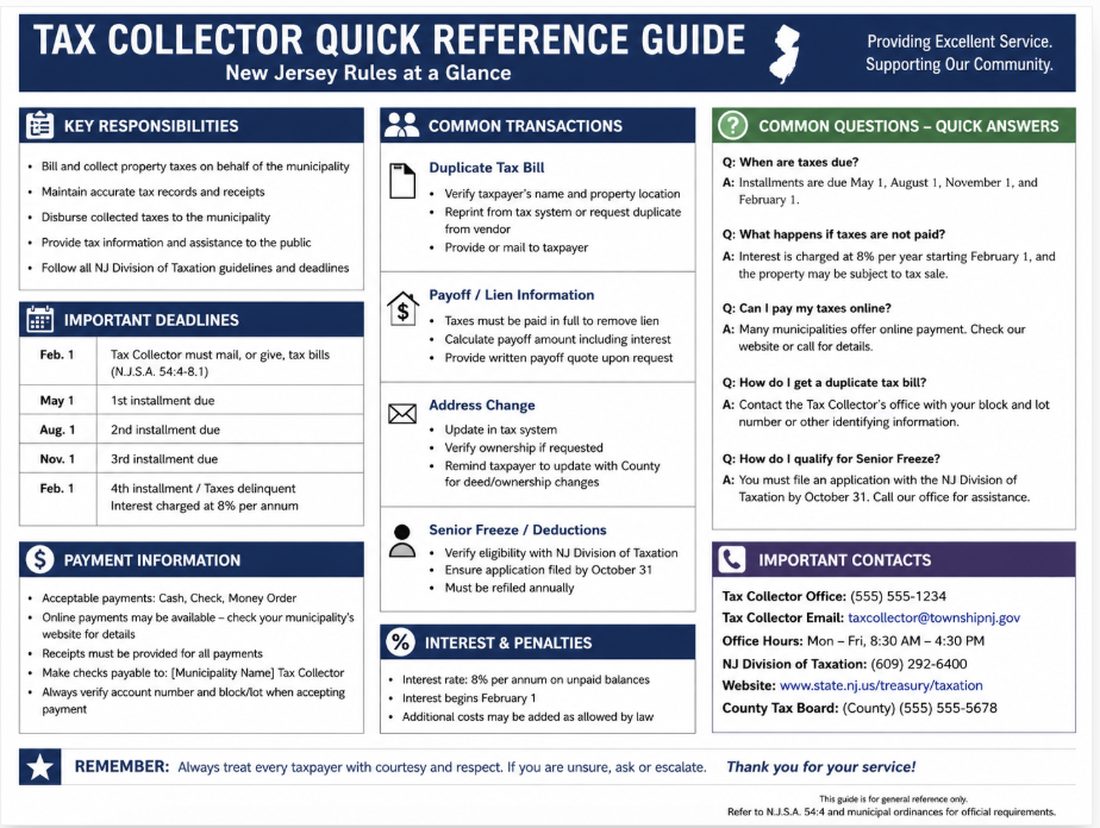
When you embrace an approach like this it makes it possible to function when staffing is limited because you are no longer relying on one person to be able to answer all inquiries. This also helps growth throughout the organization as it gives employees a glimpse into areas that may not be something they regularly deal with. Over time, these small investments in cross-training create a more resilient organization that is better equipped to handle not only family-related absences, but vacations, illnesses, retirements, and other unexpected disruptions as well. Adopting these principles and managing with empathy for the family lives of your employees is the key to having a positive workplace culture that also provides the level of service residents expect.
Balancing the Manager's Own Family Commitments
In addition to building a workforce that can adapt to the comings and goings of employees, managers must ensure that the workplace is adaptable to their own needs. Be open about this from the start, during the hiring process if possible, or as your situation changes. The conversation with the mayor or council doesn't need to be complicated. Mine has gone something like this:
There are going to be times when I need to come in late or leave early. A few minutes here and there. If I'm out for half the day, obviously I'm using time. A full day, of course I'm using time. But if it's an hour at the start or end of the day, my hope is that a completed workload, performance you're satisfied with, and a calendar full of night meetings means we don't need to start punching a clock by the minute.
If you're either already doing a good job or you're their top choice for the position, most governing bodies won't have an issue with this, because it's reasonable. The ones that won't are telling you something worth knowing.
The same openness applies with staff. Without disclosing private details, be transparent about how you're adjusting your schedule due to family obligations. Employees will take note when you're open about your own familial responsibilities and will see that you appreciate these challenges. It shows them you're committed to a flexible workplace that adapts to changing needs while still providing a high level of citizen service, and it invariably results in less resentment when the need for flexibility is your own.
That same standard is exactly how you should treat your own employees. And remember, you've had years of practice advocating for yourself in front of governing bodies. Most of your staff haven't. They may not articulate it this cleanly, or they may not bring it up at all. Don't wait for them to make the case. Offer it up.
As managers we need to be lifelong learners. The City Manager I described at the start wasn't a bad manager. He said yes when it mattered. He just didn't understand why he was saying it. Learning that has made me better at this, and the organization is better for it.
◆