The Audit That Isn’t
Austin already has one. The referendum on the ballot is something else.
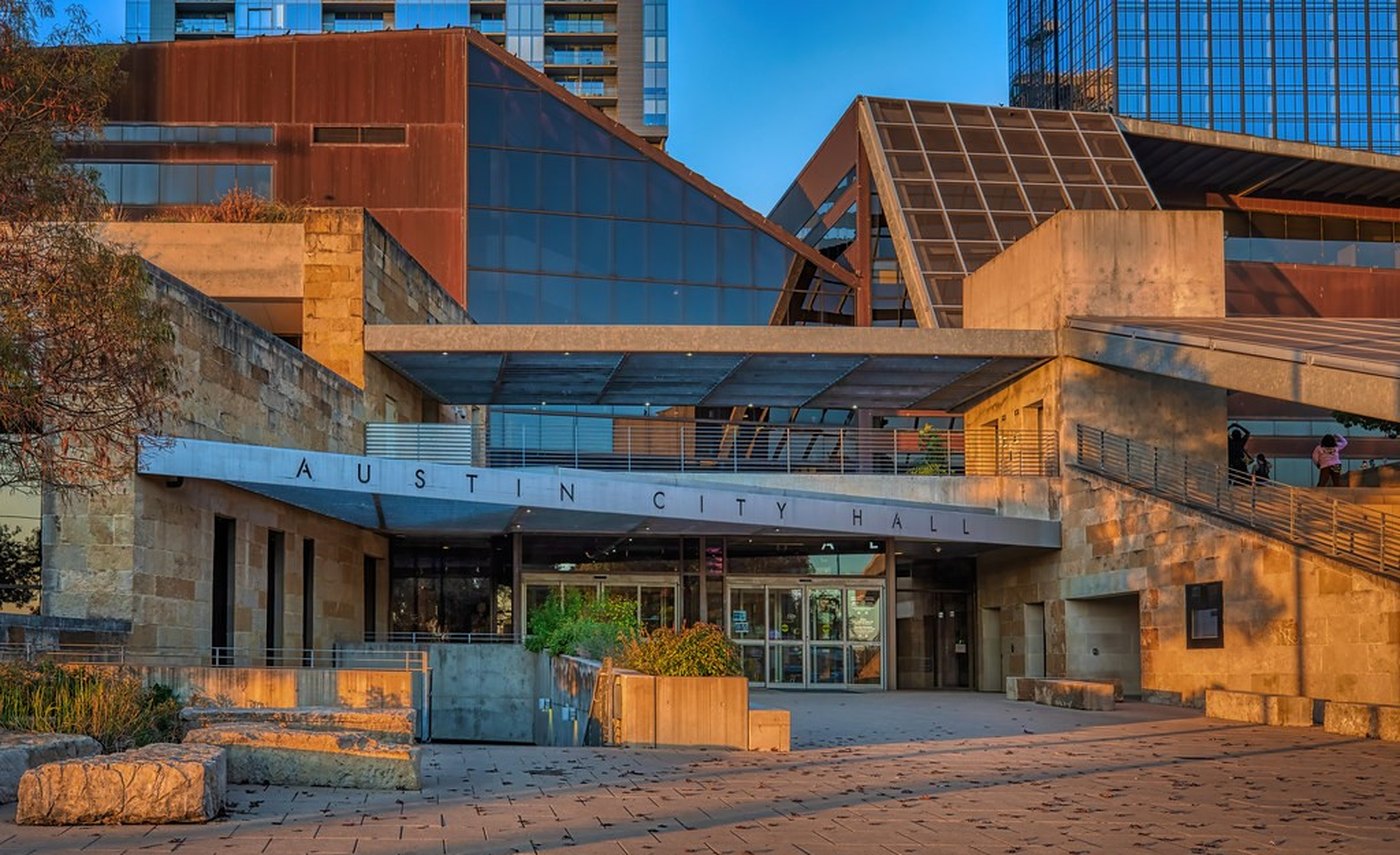
Imagine hiring a firm to do an efficiency study of your city whose charge is to examine all city funds and departments, including capital assets, revenues, expenditures, and key performance metrics. Let’s say you’re doing this because the city code requires it. And the city code also says you have to inform the person doing the job that in order to get paid, they are legally required to find savings exceeding their fee. Let that sink in, an outside firm agrees to a job that requires them to find savings. So to come on board, prior to even looking at your finances, they need to decide in advance how much waste, fraud, or abuse you might have.
If a November referendum in Austin, Texas passes, that is what will happen. Since 2021, Save Austin Now (SAN) has raised over $3 million. They’ve worked to gather signatures, get this on the ballot, and advertise to the residents of Austin. One prominent business leader gave $98,000 to the cause and there are several individual contributions of over $10,000. I don’t know the political dynamics in Austin beyond reading about this story, and whether there are underlying motives of those leading the effort or the campaign consultants on the receiving end of much of this $3 million are not the focus of this story. My intention of writing this is to show what is being made public, and what is being proposed.
Calling It an Audit Doesn’t Make It One
Despite SAN using the word audit loosely on their website, what’s being proposed is not an actual audit in the true financial sense. Further, for quite a while, they led on their website with a dramatic statement that the “City of Austin spends $6 billion a year with no public audits.” Now politics isn’t my lane, and I understand that those engaged in it sometimes get loose with the literal meanings of words. But the “no public audits” comment strikes me as odd, given there’s an entire official webpage with annual audits going back to fiscal year 2022. For added transparency, there are even monthly financial reports going back to 2018. Focusing on the audit, like any other public audit, Austin’s is done – stay with me here – in accordance with auditing standards generally accepted in the United States of America and the standards applicable . . . o.k., that’s a mouthful, but you get the gist. If you want to see it, it’s here.
If confronted with the statement on their website that the “City of Austin spends $6 billion a year with no public audits” I suspect they will draw a distinction between the audits that are done, and what exactly they are looking for. So, what’s the difference? In an annual financial audit, a firm examines the prior year’s internal controls and books. They verify that all applicable rules and regulations related to budgeting and procurement were followed. Did all purchases comply with a state’s procurement laws? Were items charged to proper accounts? Did end of year transfers follow proper protocol? Is the proper backup associated with each purchase? Most small to mid-sized communities do o.k. in this regard. Audits, while admittedly frustrating at times, often result in no findings. Large cities like Austin usually do end up with some findings and as a result develop a corrective action plan.
What an audit is not is a policy examination. If a purchase is made that comports with all applicable rules and regulations, it’s not an auditor’s job to give their opinion on the expenditure. This is what Save Austin Now wants. What they call an audit is not an audit in the traditional sense. They want a firm to come in and examine spending and make actual policy recommendations. In addition to that, they are telling a firm before they even step foot in the door that they won’t get paid unless they identify savings greater than their own cost. And even if those identified savings are found, there is nothing that forces the City Council to actually adopt them.
There is nothing wrong with what they want in principle. Examining a $6+ billion budget for economies and efficiencies is a good process. But that process should either be done internally by city officials, or externally by groups like Save Austin Now if they don’t like the direction of the City Council. All the information they need to make recommendations to the City Council is public, and they can get their hands on it. They can dig through millions of dollars and come up with ideas to present to City Council. If the council doesn’t agree, they can start a movement to elect officials that do. That’s politics. What I question is forcing those opinions via a codified process and I question what kind of firm would actually take on such a role, and do so knowing they only get paid if they identify a specific amount of savings.
The Claim That Keeps Moving
One note while writing this. Save Austin Now’s lead headline changed several times. When I first started working on this story they led with the claim that the “City of Austin spends $6 billion a year with no public audits.” A few weeks later I noticed it had changed, then I reviewed the Wayback Machine. That showed the site claiming, “no outside audits” in January 2026, then “no public audits” from at least March through May, and for a few weeks it read “without independent audits.” Now, it’s abandoned any reference to audits as the headline and merely says that “Austin’s $6 Billion of Spending Needs a Hard Look.” In one year, they modified the audit claim in the headline three times, then dropped it altogether.
Why the edits? The obvious reason: each version referencing audits was wrong, and provably so. “Without independent audits” was no better than the rest because Austin’s audit is performed by an outside firm under standards whose central requirement is independence. They kept changing the wording, and it kept being false. Then they stopped making it their leading claim at all.
The Procurement Problem
So how does a city even go about selecting a firm? The city puts out an RFP, and any firm that responds has to decide if they want to submit a proposal to receive a contract that says it only gets paid if it identifies savings equal to or greater than its fee. A serious firm would look at the public-facing documents, determine how much of its own resources the project would take and decide the work will cost, say, $X. Firms do this every day. What they don’t do is to price their own work before opening a single ledger and then confirm that the savings it finds will exceed that price. For a firm to be successful they must commit to coming up with a fee which it controls. And the savings – which it has no way of knowing without ever opening a book – are what determines whether they get paid at all. What you end up with is a firm that will prejudge its own report and guarantee a conclusion before doing the work that would produce it. How can a serious firm promise savings it hasn’t found yet? Do you really want to hire a firm that internally says something along the lines of: “Well, this will cost us $3 million. The budget is over $6 billion, I’m sure we can find something, and they don’t even have to listen to us.”
Now try and evaluate the bids on top of all this. I can see the conversation: “Wow, Firm B wants to charge $3 million, that’s a lot!” And the reply, “yeah, but that means they will find $3 million in savings! That’s awesome.” To which someone like me would reply, “uhm, how can they promise to find $3 million in savings if they haven’t even begun a study?”
The selection criteria have been inverted. Instead of choosing a firm best able to examine the city finances, you are choosing one most willing to commit to a number it can’t yet know.
Codifying Politics
What’s really happening here? A group of residents is unhappy with the current leadership and believes there should be savings. That much is evident from the political-style, professionally produced YouTube ads that name elected officials and suggest they are “demand(ing) you pay 20.2% higher city property taxes.” It’s worth stating plainly: this is a liberal city being challenged by a conservative PAC. Add a little background on Save Austin Now: multiple ballot measures, and lawsuits against the city over ballot and petition questions. On its own, none of that is concerning. Cities often fight citizen-led initiatives on process grounds, and seeking a remedy in court is a right worth pursuing.
So where might this go astray? Look at what SAN has put before voters: a ban on homeless camping, police staffing minimums, and now this “efficiency audit.” These are real issues, and as matters of policy they deserve attention. Despite the political undertones, many of the issues seem to have cross-party support. But the through-line isn’t good government. It’s a series of contested policy questions pushed onto the ballot, and the efficiency audit is that same move applied to fiscal policy. Is the proper remedy a ballot initiative in a special election – one held on a Saturday – that draws 22% turnout? And telling voters that a “yes” vote will make “City Hall open its books, show its work, and identify savings” lands differently once you notice the books are already open.
Five Stories
I said at the outset that this is about process, not spending. I’ll hold to that here. I’m not going to weigh in on whether any of these five items are as bad as SAN says, with one exception, the fraud, which resulted in a criminal indictment and speaks for itself. But let’s take a look at the “five stories that explain why Austin voters stopped trusting City Hall with their money.” Here they are:
- Austin’s City Auditor found that a former Austin Energy employee routed roughly $980,000 to fictitious vendors. This employee, and two others, were indicted and the case is pending.
- Austin’s City Auditor found that on 25 contracts over $30 million, providers missed 67 of 151 measured expectations.
- Austin’s City Auditor found the city often could not show why it needed consultants at all on many contracts.
- The city spent $1.08 million on a new brand and “public awareness campaign.”
- Records show that roughly 150 solo lunches were charged to the city credit card by the city manager. The total is about $3,780 which was reimbursed after the story came out.
Notice what the first three have in common. Every one begins with “Austin City Auditor found.” The group arguing that Austin has no real audits is citing, as its evidence, the findings of Austin’s audit. The office they say doesn’t do the job is the source of their proof that the job needs doing.
All of the audit issues have one thing in common; they are issues that could be discovered with regular management. The findings were made by an auditor, reviewed by the city manager, agreed to, and answered with a corrective action plan. If residents are still unsatisfied, they can take their concerns to the City Council, which has direct oversight of the manager. That’s the entire government functioning according to law, without the need for a new charter amendment.
The last two items are not audit findings at all. One is a branding decision, and the other is some gripes about lunch. These are policy issues that represent one-and-a-half hundredths of one percent of the annual city budget.
Conclusion
I have no idea how much Austin can trim from its budget. I’d be inclined to agree with the petitioners that in a $6.6 billion budget, there’s probably room for targeted reductions. How much of that reaches an actual property tax bill is another question. Save Austin Now founder Matt Mackowiak told KVUE the proposal was modeled after a similar effort in Houston that identified more than $120 million in suggested savings. Against Houston’s $7.5 billion budget, that’s about 1.6%, and suggested isn’t realized. It’s also worth noting how Houston got there: the city hired Ernst and Young, paid the firm to do the work, and got its findings. Nothing required the firm to promise the savings before it began. Whether the difference would be meaningful in Austin is exactly the kind of thing Save Austin Now is free to find out, through the political process, not by codifying its politics into the charter.
In that same KVUE interview, Mackowiak pointed to millions spent on art at the airport and on a new city logo. Whether he is right or not is irrelevant. So, he can read the public budget, find spending he objects to, and make his case to voters in the media. He’s literally doing what he is claiming he needs a charter amendment to accomplish, and he certainly doesn’t need a contractor working on contingency to find those numbers. They were already public and he found them. He is asking Austin residents to support his initiative to codify a process for producing criticism he just demonstrated he can produce without it.
This raises the question of what the initiative is really for. That’s for Austin to decide. But a process someone has just shown they don’t need is rarely, in my experience, about the process.